
Setting up a dedicated indoor repotting station transforms plant care from a stressful chore into a joyful ritual. Whether you have a full room or just a corner of your kitchen, this guide will help you create a functional, beautiful space for repotting your houseplants.
Why You Need a Repotting Station
Most plant parents repot on an as-needed basis, scrambling to gather supplies and protect surfaces. But having a dedicated station — even a temporary one — makes the process:
- Faster: Everything is in one place
- Cleaner: Proper containment reduces cleanup time
- More enjoyable: A well-organized space feels like self-care, not a chore
- Less stressful: No more worrying about soil on the carpet
Choosing Your Location
Permanent Stations
If you have the space, a permanent repotting station in a garage, basement, or mudroom is ideal. Look for:
- Good lighting: Natural light or bright overhead bulbs
- Water access: A sink nearby makes cleanup easy
- Sturdy surface: A workbench, table, or countertop that can handle moisture
- Storage: Shelving or cabinets for supplies
Temporary Stations
Most of us set up temporary stations on kitchen counters, dining tables, or balconies. The key is protection and portability:
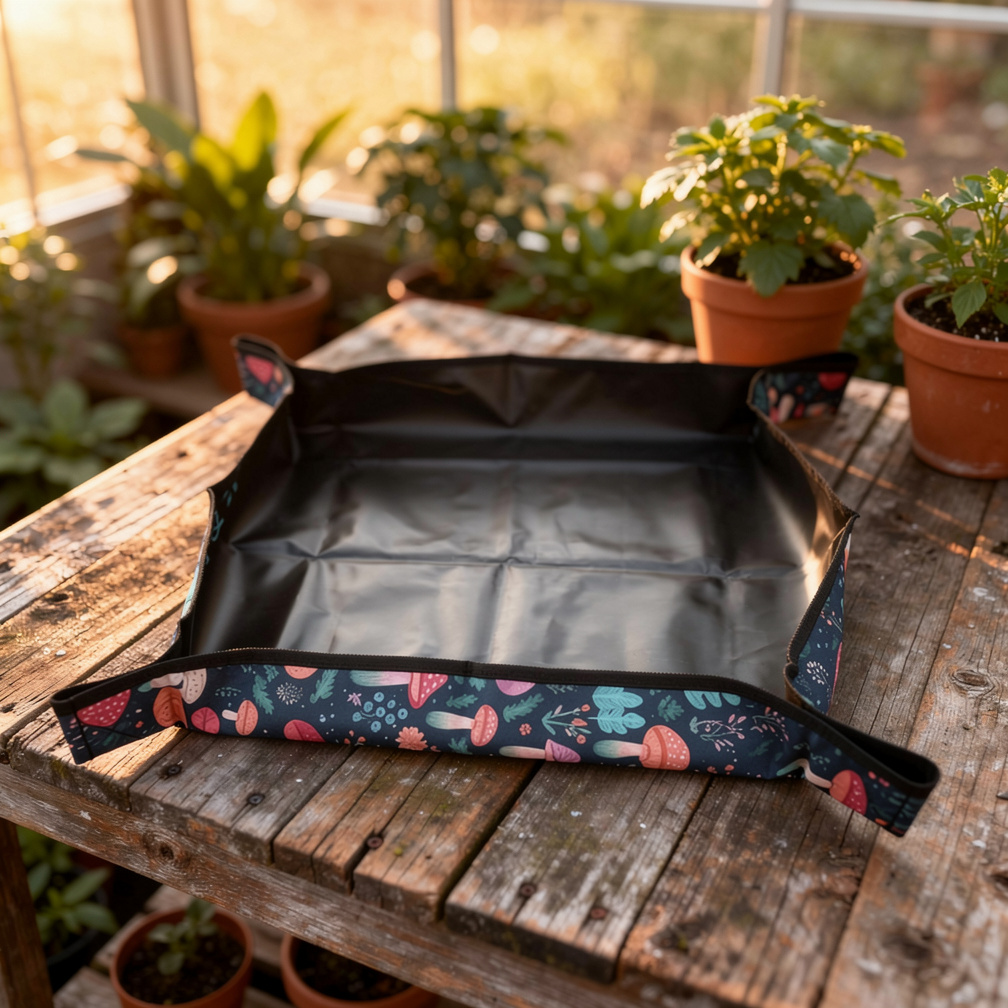
- Use a waterproof mat (like our botanical potting mat!) to protect surfaces
- Keep supplies in a portable caddy or bin
- Choose a spot with good light and easy cleanup access
Essential Supplies
The Foundation
- Potting mat: Waterproof, mess-containing surface (we may be biased, but ours has snap-up corners that actually work)
- Work surface: Table, counter, or even a large tray
- Trash bin or bag: For old soil, dead roots, and plant debris
Soil & Amendments
- Potting mixes: All-purpose, cactus, orchid — whatever your plants need
- Perlite: For drainage
- Worm castings or compost: For nutrition
- Activated charcoal: Prevents mold in containers without drainage
Tools
- Hand trowel or scoop: For moving soil
- Pruning shears: For trimming roots and dead foliage
- Chopstick or pencil: For settling soil around roots
- Spray bottle: For misting roots and cleaning leaves
- Gloves: Optional, but helpful for prickly plants
Containers & Extras
- Clean pots in various sizes: Always have a few on hand
- Drainage screens or coffee filters: To cover drainage holes
- Plant labels: To track varieties and repotting dates
- Watering can: For that first post-repot drink
Storage Solutions
Open Shelving
Keep frequently used items on open shelves for easy access:
- Soil bags in large bins (with lids to keep out pests)
- Tools in a hanging organizer or wall-mounted rack
- Small pots nested inside each other
Closed Storage
Store less-used items in cabinets or bins:
- Seasonal amendments
- Extra pots
- Backup tools
Vertical Organization
Maximize space with hooks, pegboards, and wall-mounted shelves:
- Hang tools on a pegboard
- Use S-hooks for gloves and spray bottles
- Mount narrow shelves for small supplies
Setting Up Your Workflow
A good repotting station follows a logical flow:
- Prep zone: Where you gather your plant, new pot, and soil
- Work zone: The actual repotting surface (with your mat!)
- Cleanup zone: Trash bin, brush, and cleaning supplies
- Staging zone: Where freshly repotted plants rest before returning to their spots
Make It Beautiful
Your repotting station doesn’t have to look like a garage workshop. Small touches make it a space you’ll actually want to use:
- Decorative storage: Terracotta crocks for tools, woven baskets for soil bags
- Pretty labels: Hand-lettered plant markers and labeled jars
- Living decor: Keep a few plants in your station area
- Art and inspiration: Botanical prints, pressed leaves, or a vision board
Maintenance Tips
A repotting station only works if you maintain it:
- Clean as you go: Wipe surfaces after each use
- Refill supplies: Keep a running list of what you’re low on
- Seasonal refresh: Deep clean and reorganize quarterly
- Tool care: Clean and sharpen pruning shears regularly
Final Thoughts
The best repotting station is the one you’ll actually use. Start small — even just a dedicated mat and a bin of supplies — and expand as your needs grow. The goal is to make plant care easier and more enjoyable, not to create another chore.
Your plants will thank you. And so will your floors.
Ready to upgrade your repotting ritual? Our botanical potting mat is designed to be the foundation of your indoor plant care station — waterproof, beautiful, and built to last. Shop the mat