
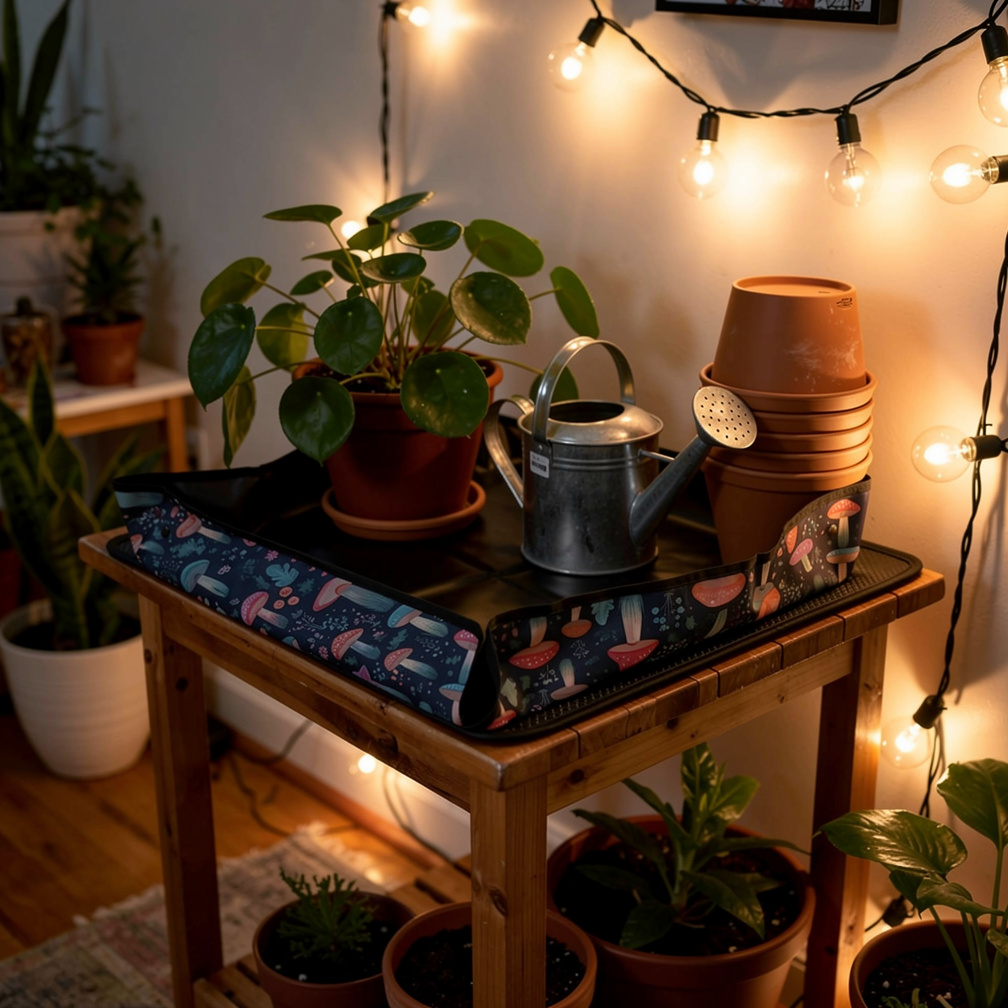
Cottagecore isn’t just for country homes with sprawling gardens. You can capture that same warmth, whimsy, and connection to nature in a small apartment — you just need to think creatively about plant styling and decor.
Here’s how to bring cottagecore magic to your space, no cottage required.
What Is Cottagecore Plant Styling?
Cottagecore aesthetics celebrate:
- Nature-inspired elements — Botanical prints, pressed flowers, mushroom motifs
- Vintage and handmade items — Terracotta pots, woven baskets, ceramic crocks
- Organic, imperfect beauty — Trailing vines, wildflower arrangements, moss and lichen
- Warm, earthy tones — Sage greens, creamy whites, warm browns, muted florals
It’s the opposite of sleek minimalism. Instead, cottagecore embraces abundance, texture, and the romantic notion that your home is a living garden.
Choosing Cottagecore-Friendly Plants
The Classics
These plants scream cottagecore:
- Pothos — Trailing vines that cascade from shelves like ivy on a cottage wall
- String of Pearls — Delicate, whimsical, straight from a fairy tale
- Ferns — Lush, forest-floor energy (maidenhair, Boston, bird’s nest)
- Ivy (English or Swedish) — Romantic, trailing, cottage-garden vibes
- Begonias — Old-fashioned charm with beautiful foliage
- African Violets — Soft, nostalgic, grandma’s-house energy
The Wildflowers
For a wild-garden feel, add plants with delicate, organic shapes:
- Baby’s Tears — Soft, moss-like groundcover
- Peperomia — Quirky leaves that feel foraged
- Fittonia (Nerve Plant) — Intricate leaf patterns like pressed botanicals
- Tradescantia — Trailing, colorful, slightly wild
The Unusual
Cottagecore loves a bit of whimsy:
- Air Plants — Displayed in shells, driftwood, or vintage containers
- Staghorn Fern — Mounted on wood like a forest trophy
- Orchids — Delicate, elegant, unexpected
Pots and Planters
Plastic nursery pots are the antithesis of cottagecore. Swap them for:
Terracotta
The ultimate cottagecore pot. Earthy, porous, ages beautifully. Bonus points if they have moss or patina.
Ceramic Crocks and Vintage Containers
Think:
- Antique teacups and sugar bowls
- Vintage pitchers and milk jugs
- Enamelware mugs
- Ceramic bowls from thrift stores
Woven Baskets
Use as cache pots (outer pots that hide plastic nursery pots). Natural fiber baskets add texture and warmth.
Hanging Planters
Macramé hangers are peak cottagecore. Look for:
- Natural cotton or jute
- Vintage or handmade designs
- Simple, classic knots
Styling Your Plants
Layering and Grouping
Cottagecore isn’t about single, spaced-out plants. It’s about abundance:
- Cluster plants together in varying heights
- Use plant stands to create levels
- Mix trailing and upright plants for visual interest
- Group by color family (all green, or green + white, or green + pink)
The Cottage Shelf
Create a “living shelf” that feels like a garden wall:
- Start with a wooden or vintage shelf
- Add trailing plants on top (pothos, string of pearls)
- Fill in with upright plants (ferns, begonias)
- Tuck in small pots at different depths
- Add botanical prints, dried flowers, or vintage books between plants
The Windowsill Garden
Turn a sunny window into a mini greenhouse:
- Line the sill with terracotta pots
- Add small herbs (basil, thyme, mint) for function + beauty
- Hang a macramé planter in the window frame
- Tuck in a vintage watering can or mister
Cottagecore Decor Elements
Botanical Prints and Pressed Flowers
Frame vintage botanical illustrations or press your own flowers:
- Hang them in simple wood or gold frames
- Lean them on shelves among plants
- Create a gallery wall of botanical art
Mushroom Motifs
Mushrooms are the cottagecore icon. Add them via:
- Ceramic mushroom figurines tucked into plant pots
- Mushroom-printed textiles (like our botanical potting mat!)
- Vintage mushroom field guides or illustrated books
- Hand-painted mushroom pot decorations
Natural Textures
Layer in materials that feel earthy and handmade:
- Linen and cotton curtains, tablecloths, and tea towels
- Wood shelves, plant stands, and vintage crates
- Wicker and rattan baskets, trays, and furniture
- Stone and ceramic decorative objects
Vintage Finds
Scour thrift stores and estate sales for:
- Old watering cans (the more weathered, the better)
- Vintage garden tools (display them as art)
- Antique botanical books
- Enamelware and crockery
- Woven baskets and wooden boxes
Small-Space Strategies
Go Vertical
When floor space is limited, grow upward:
- Wall-mounted shelves for trailing plants
- Hanging planters from ceiling hooks
- Tension rod plant shelves in windows
- Ladder-style plant stands
Use Mirrors
Place a mirror behind or beside your plant groupings to:
- Reflect light (helps plants grow)
- Create the illusion of more space
- Double the visual impact of your greenery
Choose Multi-Functional Pieces
In small spaces, everything should earn its keep:
- Plant stands that double as side tables
- Vintage stools as plant pedestals
- Windowsill herb gardens that are both decor and kitchen ingredients
Edit and Rotate
You don’t need to display every plant at once:
- Rotate plants seasonally
- Move some to less-visible spots to give others the spotlight
- Propagate and gift extras to friends
Color Palette
Cottagecore thrives on warm, natural tones:
The Base
- Creamy whites — Walls, shelves, pots
- Warm wood tones — Furniture, shelves, accents
- Soft greens — The foundation (hello, plants!)
The Accents
- Sage and moss green — Ceramics, textiles
- Blush pink — Begonias, flowers, textiles
- Terracotta and rust — Pots, vintage finds
- Muted florals — Botanical prints, fabrics
Avoid: Bright white, cool grays, neon colors, stark black
Bringing It All Together
Here’s a step-by-step plan to cottagecore-ify your small space:
- Audit your plants — Keep what feels organic and cottage-like; rehome anything too modern or architectural
- Swap pots — Replace plastic with terracotta, ceramics, and baskets
- Create clusters — Group 3-5 plants together instead of scattering them
- Add one vintage piece — A watering can, a basket, a botanical print
- Introduce texture — A linen curtain, a woven basket, a wood shelf
- Layer in whimsy — A mushroom figurine, a macramé hanger, a pressed flower
Start small. Cottagecore is about gradual accumulation and curation, not overnight transformation.
Final Thoughts
Cottagecore plant styling isn’t about perfection — it’s about creating a space that feels alive, warm, and deeply yours. It’s about surrounding yourself with things that grow, things that were handmade, things that carry stories.
You don’t need a country cottage to live this way. You just need to slow down, tend to your plants, and let your space grow as wild and beautiful as you want it to be.
Want to bring cottagecore beauty to your plant care ritual? Our botanical potting mat features hand-illustrated mushrooms and wildflowers — functional art for your indoor garden. Shop the mat